ZoomInfo is a strong pick if you're an enterprise or mid-market sales org that sells primarily into North America, needs the widest possible contact database, and has the budget for a five-figure annual contract with a three-seat minimum. If you're a smaller team, a solo founder, or anyone who just wants fresh leads without signing a year-long agreement, that's exactly the gap a ZoomInfo alternative like Meet Rocco is built to fill.
The real difference isn't just the price tag, it's the buying model. ZoomInfo sells a large, stored database behind a sales-led, annual contract with seat minimums and a layered credit system. Meet Rocco sells real-time lead sourcing on a credit basis, monthly subscription or pay-as-you-go, with no seat multiplier and no contract to negotiate. If you're comparing zoominfo alternatives, that trade-off is the one to weigh first.

ZoomInfo is the name most sales and marketing teams think of first when they need B2B contact data. It's built a reputation as the enterprise standard, backed by a database north of 260 million contacts and a long list of G2 category wins. For teams with the budget and the volume to match, it's genuinely hard to out-cover.
But enterprise standard comes with an enterprise price tag and an enterprise sales process, and that's precisely why so many people search for a ZoomInfo alternative in the first place. This comparison looks at what ZoomInfo actually costs once seats and credits are factored in, what independent reviewers say about its data accuracy, and how Meet Rocco's credit-based, contract-free model stacks up for teams that don't want to commit five figures upfront. All pricing figures are drawn from publicly reported buyer data and third-party pricing analyses, since ZoomInfo doesn't publish its own pricing; that's flagged wherever it applies.
ZoomInfo is a cloud-based B2B data and go-to-market intelligence platform. Its core product bundles a large contact and company database with intent data, org charts, a Chrome extension, and integrations into every major CRM. It's aimed squarely at sales, marketing, and recruiting teams operating at scale, particularly those selling by phone into North American accounts.
Pricing isn't published. Every plan is quoted by a sales rep, sold on an annual contract, and enforced with a minimum of three seats regardless of how many people actually need access. That structure is part of why ZoomInfo alternatives get searched for so often, the entry point alone puts it out of reach for a lot of smaller teams before features even come into the conversation.
ZoomInfo's core strength is database depth: filterable search by role, seniority, industry, technographics, and buying intent, layered with org chart mapping that shows reporting lines inside target accounts. This is the feature enterprise buyers cite most often as the reason they stay.
Beyond static contact records, ZoomInfo layers in intent signals, funding events, hiring surges, and technology adoption, aimed at helping reps time outreach. This sits behind higher-tier plans and is one of the features most commonly gated from the entry-level Professional plan.
Every plan comes with a set credit allowance for accessing and exporting contact data, separate from seat count. Once a team burns through its allotment, additional credits have been reported at roughly $0.50 to $1.50 each depending on volume, and most credit pools don't roll over between billing periods.
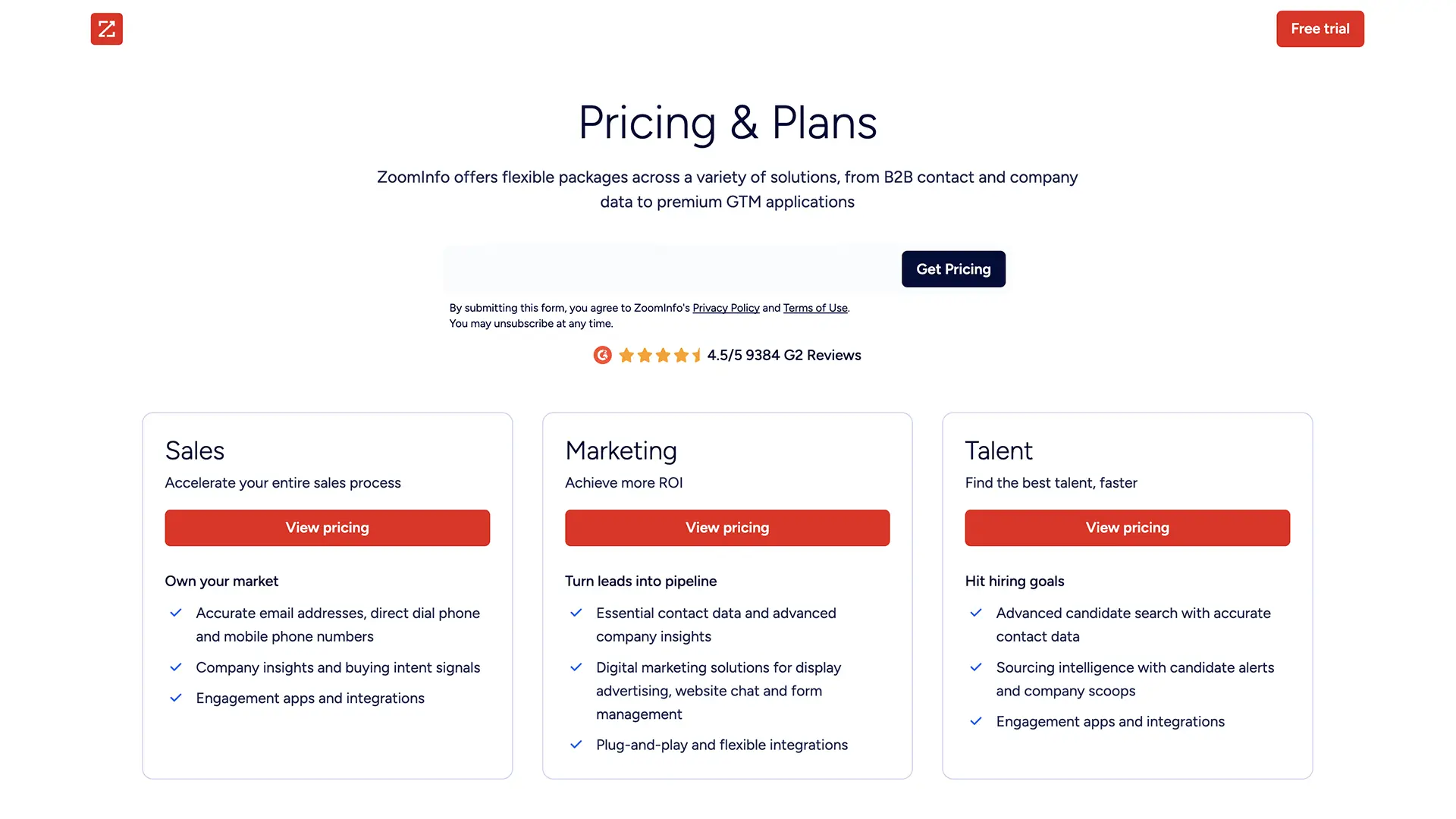
Based on buyer-reported data and third-party pricing analyses, since ZoomInfo does not list prices publicly, plans break down roughly as follows:
Every tier is sold on an annual contract with no monthly billing option and a three-seat minimum, even for a single user. Vendr's buyer dataset puts the median ZoomInfo contract at roughly $31,875/year across verified purchases.
The published entry price undersells what most teams actually pay. Once seat additions, credit overages, and add-ons like intent data or global data coverage are factored in, independent guides consistently put the real mid-market cost between $30,000 and $60,000 a year, on a contract you can't exit for twelve months. Compared with that, Meet Rocco's Starter plan runs $25/month with no seat minimum, and the free trial gives you 500 credits with no card required, so you can test lead quality before spending anything. For a lot of the teams searching for a zoominfo alternative, that gap alone is the deciding factor, not a features checklist.
Independent reviews are genuinely split. G2 and TrustRadius reviewers frequently praise ZoomInfo's US contact accuracy and org chart depth, and it holds a strong average rating across thousands of reviews. But the recurring complaint, even from satisfied users, is data freshness: contacts who've changed jobs can take months to update in the database, which drives elevated bounce rates on outreach. Multiple reviewers also note that accuracy drops noticeably outside North America, with EMEA and APAC coverage described as thinner and less reliable. These are third-party observations, not something independently benchmarked here.
Meet Rocco takes a different approach, sourcing contacts by mining the web in real time rather than serving from a stored, periodically refreshed database, which it frames as a way to reduce the staleness problem reviewers raise about databases like ZoomInfo's.
Meet Rocco is built for sourcing and contact reveals, not full sequencing, dialling, or org chart intelligence. Teams that already have an outreach or CRM tool can plug Meet Rocco in purely to source fresh leads, paying only for the reveals they use, without carrying the cost of an enterprise database they don't fully need.
ZoomInfo earns its reputation as the enterprise standard: database depth, org chart intelligence, and intent data genuinely justify the price for teams operating at scale in North America. The trade-off is a sales-led buying process, an annual contract with a three-seat minimum, and a real-world cost that regularly lands well above the published entry price.
Meet Rocco takes the opposite bet: no seat multiplier, no annual contract, credits that roll over for a full year, and a free trial you can actually start without talking to sales. For teams asking which zoominfo alternative fits without the enterprise price tag, that's the core difference to weigh, not features on paper, but whether you want to buy a platform or buy the leads you actually need.
If your team is evaluating zoominfo alternatives because the cost or the contract doesn't fit, start with Meet Rocco's free trial and see the lead quality for yourself before committing to anything.
This comparison is based on publicly available information from official websites, third-party pricing analyses, and published buyer data at the time of writing (August 31, 2026). ZoomInfo does not publish its own pricing, so figures here are drawn from buyer-reported data and third-party breakdowns, and may not reflect every quote. Features, pricing, and product capabilities may change over time. Organisations should evaluate both platforms against their own outreach goals, budget, and workflow requirements before making a purchasing decision.